The road to Formula 4
There was never a plan. There was a garage, a kart that was always missing something, and a need to find out how fast it was possible to go.
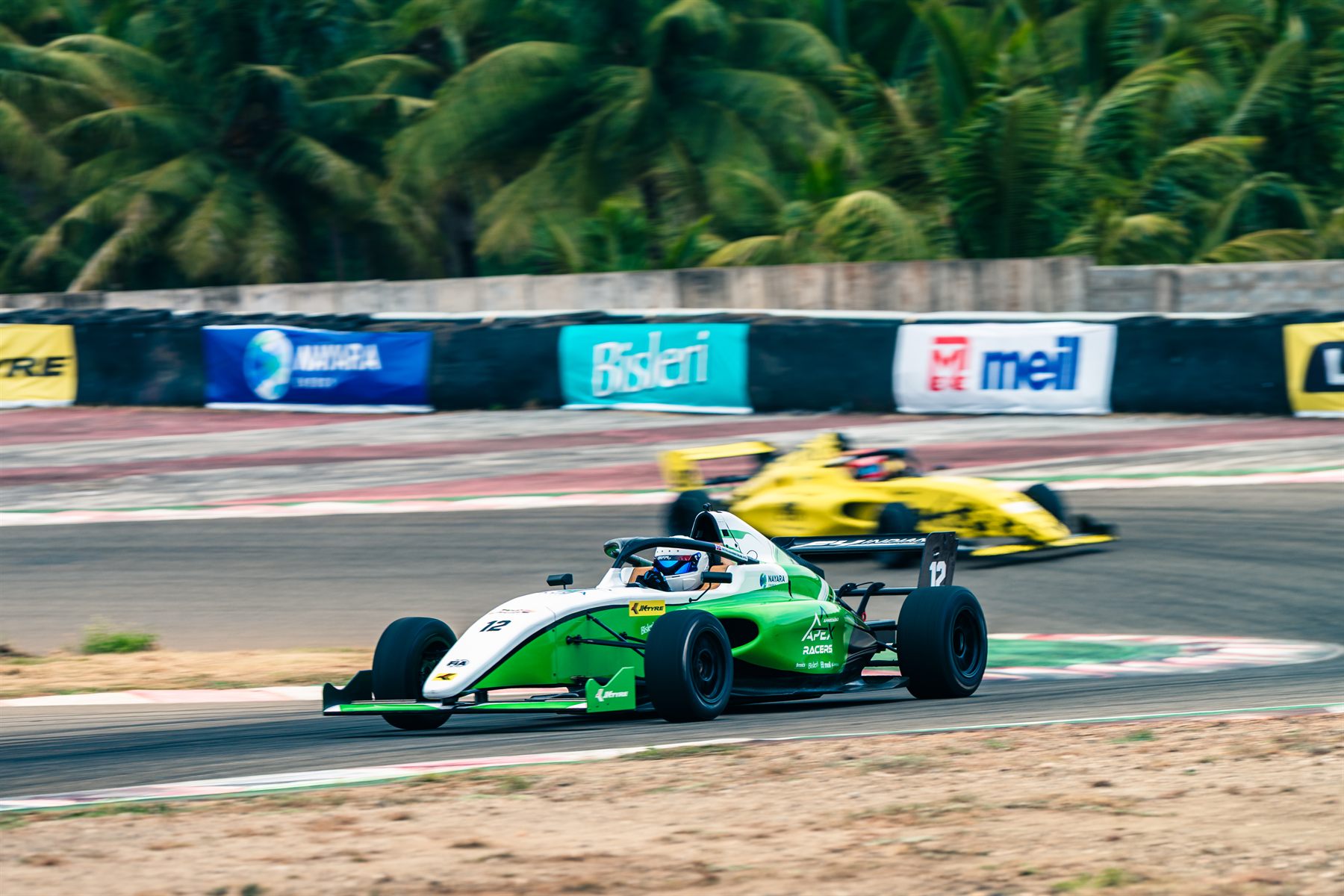
People often ask when I decided to go for racing. The truth is I never decided. I just started driving, and then I never stopped.
It started with karting. Then motocross. Then ATVs. Not because anyone had mapped out a route, but because that was what existed where I grew up. None of it was an academy with training plans and data engineers. It was me, a couple of friends, and far too many hours in a cold garage with tools that never quite fitted.
What you learn without knowing you are learning it
Looking back, that upbringing gave me something that is hard to learn later. When you ride motocross, you are riding a machine that loses grip constantly. You build a feel for the moment it is about to happen — not afterwards, but in the second it begins. The body reacts before the head catches up.
That feel is gold in a single-seater. Not because a formula car slides the same way, but because the same mechanism is at work: you have to know where the limit is before you hit it. The data tells you afterwards whether you were right. But it does not drive the car for you.
The first time anyone measured it
The turning point came at the Windfeld Racing School trials. It was the first time my driving was properly measured — telemetry, onboard footage, direct comparison against drivers who had been doing this longer than me.
It is a strange feeling. Your whole life you have had a gut sense that you might be quite good. Then someone sits you in front of a screen and shows you exactly where you lose time, where you brake too early, where you do not dare enough. It could have gone either way.
It went my way. And after that it was no longer a dream I talked about — it was something I worked towards.
What I carry forward
I will meet drivers who have been in single-seaters since they were eleven, with a simulator at home and a whole operation around them. I do not have that background. It is a disadvantage in some areas, and I have stopped pretending otherwise.
But I have something they do not: I have had to work things out myself. When something goes wrong on track, I have not always had a team to ask. Then I have to solve it in the car, on that lap. I have been training for that since I was small, without knowing that was what I was training.
Now I race number 12 in Indian Formula 4. It took a while to get used to the idea.
← Back to the log